New flat in Hyderabad? 15 things to check before you start interiors

Getting the keys to a new flat is exciting, and it is tempting to call a carpenter the same week. A few checks before the interiors begin can save money and months of small irritations. Here is the checklist we walk through with families in new gated communities across Hyderabad, from Kokapet and Narsingi to Bachupally and Kompally.
Before handover: what to ask the builder
Most builders allow some changes until a certain stage of construction. Ask early, in writing, and keep a copy of what was agreed.
- Get the final electrical layout and add points while you still can: sockets on both sides of the bed, behind the TV wall, near the study table and a dedicated point for the mixer grinder at counter height.
- Confirm the AC points and drain pipe positions in every bedroom and the living room. Drains that run across a wall later are difficult to hide.
- Check the plumbing points for the washing machine, water purifier and geyser are where you want them, not just where the standard layout puts them.
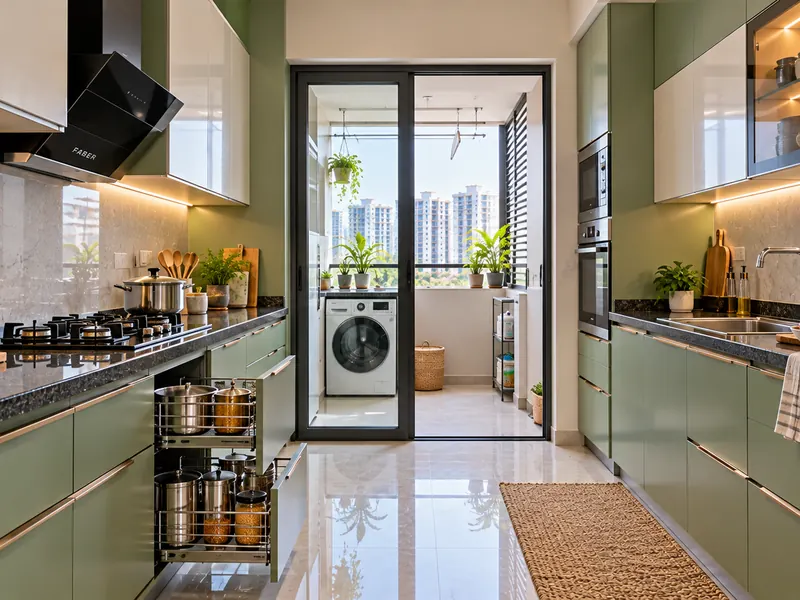
- Planning a modular kitchen? Check with the builder about skipping the granite kitchen platform, since removing it later means extra cost and dust.
- Ask for the association's fit-out rules: work timings, lift use, debris disposal, the refundable deposit and any approvals needed before work starts.
At handover: what to inspect
Take a notebook, a torch, a spirit level app on your phone and a cheap socket tester. Note everything with photos, and give the list to the builder's customer care team before you sign the handover.
- Check every wall for damp patches, especially walls shared with bathrooms and the kitchen. Damp walls must be fixed before wardrobes or panelling go against them.
- Open and close every door and window. Note anything that sticks, rubs or does not lock, and check the window seals for gaps.
- Check floor levels near bathroom and balcony doors. Water should flow away from the rooms, not into them.
- Test every switch and socket. Make sure the earthing works and the main board is labelled.
- Look for hollow-sounding or cracked tiles by tapping across the floor with a coin.
- Run every tap and flush, and check under the sinks for leaks after a few minutes.
Swipe sideways to see all columns
| Area | What to check | Why it matters for interiors |
|---|---|---|
| Bedroom walls | Damp, cracks, straightness | Wardrobes on damp walls develop fungus |
| Kitchen | Platform, plumbing, exhaust opening | Decides the modular kitchen layout |
| Ceilings | Leaks, cracks, AC sleeves | Must be fixed before any false ceiling |
| Floors | Hollow tiles, slope near doors | New furniture sits on these for years |
| Electrical | Earthing, labelled board, point count | Adding points later means breaking walls |
Before interiors start
- Measure your large furniture and appliances, such as the fridge, sofa, dining table and washing machine, so the design leaves space for them.
- Decide what you are bringing from your current home and what will be new. It changes the design and the budget.
- Fix your move-in or griha pravesam date and plan the interiors backwards from it, with the kitchen, wardrobes and pooja unit first.
- Set a realistic budget with some money kept aside for appliances, curtains and decor, which are usually outside an interior quote. Our cost guide explains what usually is and is not included.
Common mistakes new flat owners make
- Starting carpentry before the flat has been checked for damp.
- Letting the builder install a kitchen platform that will be broken a month later.
- Choosing laminates from a phone screen instead of seeing samples in daylight.
- Forgetting AC drains and geyser points until after the false ceiling is up.
- Trying to finish everything before the griha pravesam and rushing the important rooms.
A typical sequence from possession to move-in
- Floor plan review and changes requested from the builder.
- Handover inspection and snag list submitted.
- Fit-out approval from the association.
- Site measurements and final design.
- Electrical and plumbing changes, then the false ceiling.
- Kitchen, wardrobes and other carpentry installed.
- Painting, cleaning and the griha pravesam.
Doing these in order avoids the most common rework: breaking a new ceiling to add a light point, or cutting a new wardrobe to reach a plumbing line.
Documents and approvals to keep ready
- A copy of the handover letter and the snag list you submitted.
- The fit-out request form and deposit receipt from the association.
- The builder's electrical and plumbing drawings, if they share them.
- Warranty cards for fittings the builder installed, such as taps and switches.
- A list of approved work timings to share with your interior team.
Budgeting after possession
After the down payment, registration and loan charges, many families find the interiors budget smaller than planned. It helps to split it into must-haves for move-in (kitchen, wardrobes, basic lighting), important-but-can-wait (TV unit, false ceiling in bedrooms, study), and later (decor, wallpaper, extra furniture). Spending on the must-haves first means you move into a working home, and the rest can follow without rushing.
Summer and monsoon checks for a new flat
If you get possession in summer, check which rooms get the strongest afternoon sun. West-facing bedrooms may need heavier curtains, and top-floor flats may need insulation above a false ceiling. If you get possession in the monsoon, use the rain to your advantage: look for water marks around windows, under the balcony door and on ceilings below bathrooms, and get them fixed before anything is built against those walls.
In either season, run the exhaust fans in the kitchen and bathrooms and check that the openings lead outside. A blocked or missing exhaust outlet is much easier to sort out before the kitchen cabinets and false ceiling go up.
Most of these checks cost nothing. Missing them usually means breaking something new later, which is the most expensive way to fix a small mistake. If you would like help with the handover or the planning, our new flat interiors team can walk through the flat with you.
Frequently asked questions
How long before possession should I start planning interiors?
As soon as you have the final floor plan. Changes at the builder's end, such as electrical points, are easiest and cheapest before handover.
Can I start interiors before the registration is complete?
It depends on your builder and association. Most allow fit-out only after handover and a fit-out approval, so check their rules first.
Who fixes defects found at handover?
The builder, under their defect liability period. Report them in writing with photos before interiors cover the problem areas.
Should I do a deep clean before interiors start?
A basic clean helps you spot damp patches and cracks during inspection. The full deep clean is better done after the interiors are finished, as carpentry and ceiling work create a lot of dust.
Can I move in before the interiors are complete?
Yes, if the kitchen, wardrobes and at least one bedroom are ready. Plan the remaining work room by room so you can live around it.